

Buying a perfume should feel exciting.
Instead, it often feels like a pop quiz you didn’t study for.
Parfum. Eau de parfum. Eau de toilette. Intense. Absolute.
At some point, you’re just nodding politely and hoping it smells nice.
This guide is here to fix that.
We’re breaking down the types of perfumes, how they’re classified, how strong they really are, and which ones actually suit your style and daily life. No jargon. No pressure. Just clarity, explained the easy way.
What do “types of perfumes” actually mean?
When people search for different types of perfumes, they’re usually trying to understand one of three things:
- How strong a perfume is?
- How long does it lasts?
- What kind of scent does it belong to?
Once you understand these layers, perfume shopping stops being confusing and starts feeling fun again.
Also Read: Why Vanilla Perfume for Women is the Next Big Trend in Summer
1. Perfume Types by Strength (This Part Matters Most)
This is where most confusion begins. Perfume strength is all about concentration, meaning how much fragrance oil is mixed into the liquid.
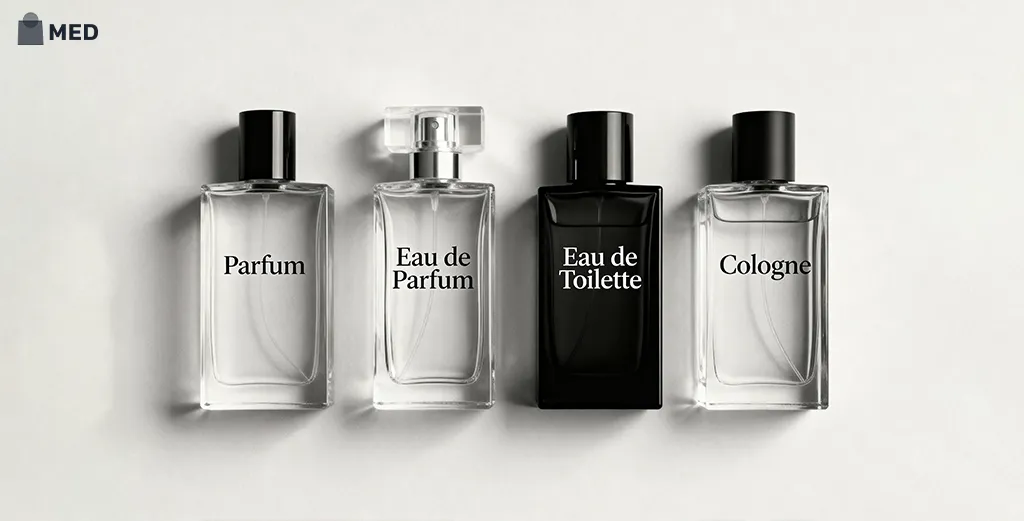
Parfum (Extrait de Parfum)
This is the richest and most intense option.
Parfum has the highest fragrance concentration, which means it lasts the longest and smells the strongest. A little goes a long way.
If you’re ever wondering about the strongest type of perfume or the type of perfume that lasts longer, this is it.
Eau de Parfum (EDP)
The most balanced and popular choice.
Eau de parfum lasts for hours without feeling overpowering, which is why it’s one of the most searched perfume types explained online.
When people ask about the perfume and parfum difference, they’re usually comparing Parfum and Eau de Parfum.
Eau de Toilette (EDT)
Lighter, fresher, and easier to wear.
EDT works well for daytime, offices, and warm weather. Many types of men’s perfume fall into this category because it feels clean and effortless.
Eau de Cologne (EDC)
Short-lived but refreshing.
Cologne is more about instant freshness than long-lasting impact.
Eau Fraîche
The lightest of all eau de types.
Mostly water-based, subtle, and perfect if you don’t want anything heavy on your skin.
Types of Perfumes by Concentration (Quick Comparison Table)
| Perfume Type | Fragrance Oil Level | Lasting Power | Best For | Style & Feel |
| Parfum (Extrait de Parfum) | Very High | 8–12 hours or more | Special occasions, evenings | Deep, rich, intense |
| Eau de Parfum (EDP) | High | 6–8 hours | Daily wear, work, events | Balanced and noticeable |
| Eau de Toilette (EDT) | Medium | 3–5 hours | Daytime, warm weather | Light, fresh, airy |
| Eau de Cologne (EDC) | Low | 2–3 hours | Quick freshness | Clean and subtle |
| Eau Fraîche | Very Low | 1–2 hours | Skin refresh, summer use | Soft and barely-there |
This single table explains most types of perfume concentration, different grades of perfume, and different levels of perfume that people struggle to differentiate.
2. Perfume Categories by Scent (What It Smells Like)
Once strength is sorted, scent comes next. These are the categories of perfume based on fragrance families.
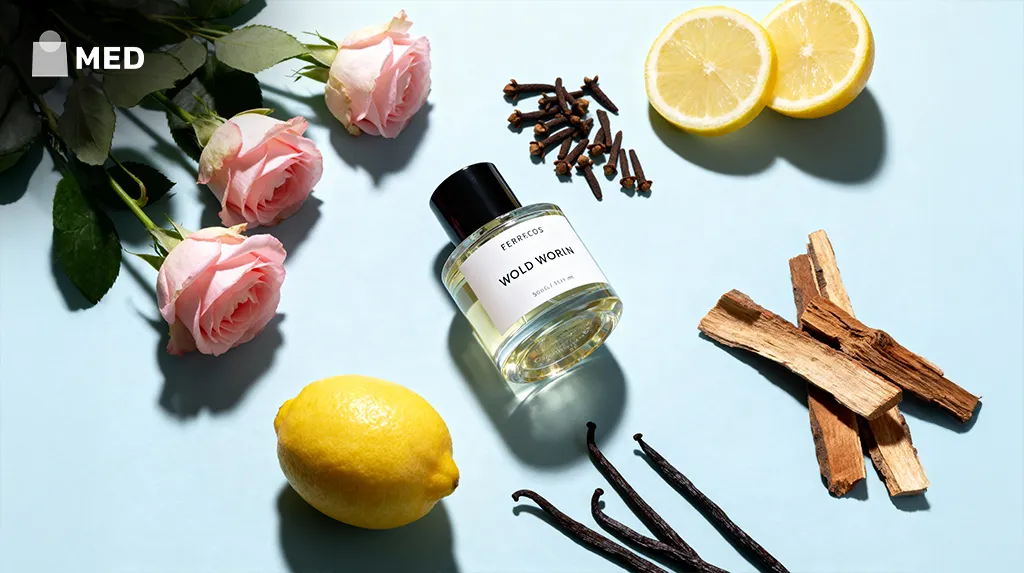
Floral
Rose, jasmine, lily, peony.
Soft, romantic, and timeless. Traditionally common in types of perfume for women, but increasingly unisex.
Woody
Sandalwood, cedar, vetiver.
Warm, grounded, and elegant. Very popular in men’s perfumes.
Fresh
Citrus, aquatic, green notes.
Clean and energising. Great for everyday wear.
Oriental / Amber
Vanilla, spices, resins.
Deep, sensual, and bold. Ideal for evenings.
Gourmand
Coffee, chocolate, caramel.
Sweet, expressive, and modern. A growing variety of perfumes loved by younger audiences.
Spicy
Pepper, cardamom, cinnamon.
Confident and distinctive. Common in kinds of perfume for men.
These scent families are what people mean when they talk about different perfume categories or classifications of perfumes.
Also Read: Find the Best Branded Perfume Deals This Season
3. Types of Perfume for Men and Women (The Lines Are Blurry Now)
Traditionally, fragrance brands separated types of perfume for men and types of perfume for women.
Men’s perfumes leaned toward woody or spicy.
Women’s perfumes leaned floral or sweet.
Today, those lines are optional.
Many modern fragrances are unisex, and the best type of perfume is simply the one that feels right on you. That’s why searches like types of perfume for males and kinds of perfume overlap so much now.
4. Perfume Types by Style and Usage
Another way to understand the different types of perfumes is how and when you wear them.
- Daily wear perfumes are lighter and fresher.
- Occasion perfumes are richer and longer-lasting.
- Seasonal perfumes shift with the weather.
Summer suits citrus and aquatic notes. Winter welcomes woody and spicy scents. This adds another layer to different categories of perfume.
5. Fragrance vs Perfume: What’s the Difference?
This is a common question.
- Fragrance is the umbrella term for all scented products.
- Perfume usually refers to higher concentration scents.
So when people search for the fragrance and perfume difference, the confusion is more about terminology than quality.
Also Read:
6. Perfume Bottle Types (Why They Matter)
While bottles don’t change the scent itself, they change how you experience it.
- Spray bottles offer even application
- Roll-ons are travel-friendly
- Dab bottles suit high-strength perfumes
These perfume bottle types influence how much fragrance you apply and how intense it feels.
7. Choosing the Right Type of Perfume (Without Overthinking)
Ask yourself three simple questions:
- Do I want something light or long-lasting?
- Is this for daily wear or special occasions?
- Do I prefer fresh, sweet, woody, or spicy scents?
Once you answer these, the right perfume type almost chooses itself.
8. Perfume Beyond Personal Wear
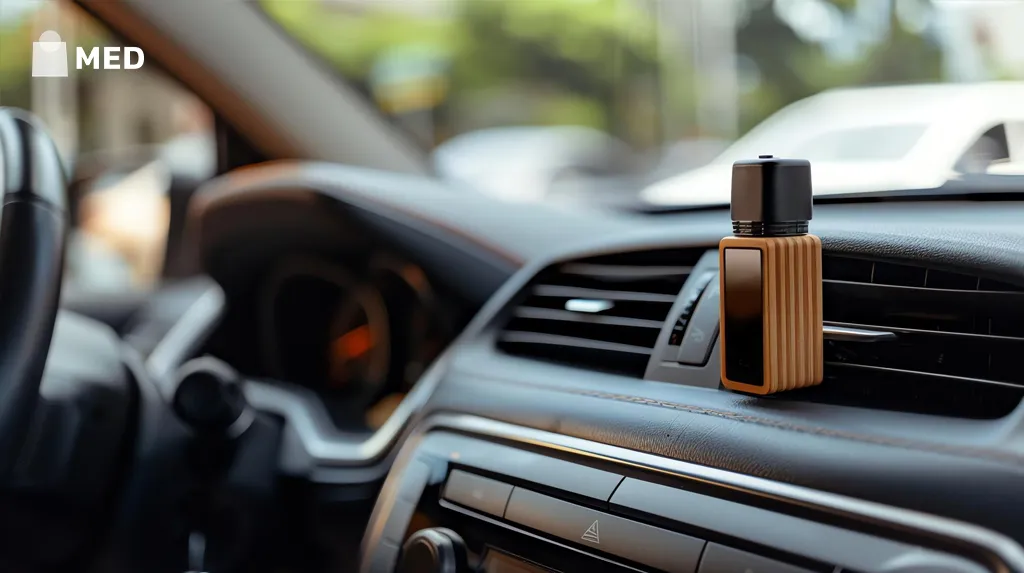
Perfumes aren’t just for skin anymore.
Fragrances now shape spaces too, including cars. If you’re curious how scent behaves differently in confined environments, our guide on Best Car Perfumes in India 2025 – Top Fragrances for a Fresh Ride explores how concentration and notes perform on the move.
It’s a natural next read if you’re diving deeper into scent choices.
Final Sip
Understanding the types of perfumes isn’t about memorising fancy terms. It’s about knowing what works for you.
Once you understand perfume strengths, scent families, and usage styles, shopping becomes intuitive instead of overwhelming.
The right perfume doesn’t shout.
It fits.
And when it does, you’ll know.